
Department of Computer Technology – SF

It started its humble beginning in 2011 as an unaided Self-Financing department with the objective of imparting quality education in the field of Computer Science. With rapidly evolving technology, the department aspires to reassert the significance of high quality education by producing competent professionals who can shape the destiny of our country.
Vision

To continue to be the Premier Department for Computer Technology and to become regionally top-ranked and nationally recognized for Academic Excellence

Mission

To offer a broad-based education, encourage lifelong learning, foster teamwork, promote creativity, discovery and competitiveness.
To turn out highly qualified graduates into world-class professionals capable of competing in the IT Arena as well as in a research environment.
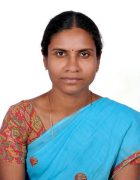
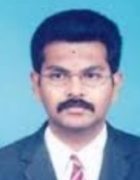
Leela-Swayam-Photo

Dr. K. S. Leelavathi

Assistant Professor
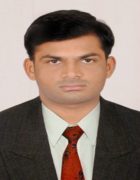
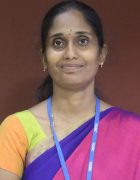
Keerthi Photo

Dr. C. Keerthana

Assistant Professor
IMG_20260707_200223

Dr. R. Jayaprakash

Assistant Professor
sen

Dr.M.Rajasenathipathi

Associate Professor & Head
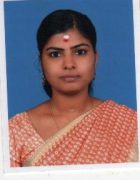
Dr. A. Kalaivani

Dr. A. Kalaivani

Assistant Professor

B.Sc CT Syllabus 2025-2028

CYGNET
Creating Young Generation for Next Emerging Technologies

As an effort to highlight the inner determination to go forward despite the challenges and create self-affirmation in our students, association activities are started.


CYGNET Office bearers for the Academic Year 2024 -2025.

President P. Vaishnavi – D3 CT
Vice-President S. Sanjay – D2CT
Secretary N. Sakthivel – D3CT
Joint Secretary A. Arbina Khatum – D2CT
Treasurer M. Sree Dharshini – D1CT
Joint Treasurer G. Nehashree – D1CT


CYGNET Office bearers for the Academic Year 2023 -2024.

President K. Ganesh Kumar – D3CT
Vice-President Ashifa. M – D3CT
Secretary Ms. A. Arbina Khatum – D1CT
Joint Secretary N. Ramyakrishnan – D1CT
Treasurer S. Sareswathi – D2CT
Joint Treasurer V.K. Praveena – D2CT
Programme Outcomes (POs)
On successful completion of the B.Sc., Computer Technology program
 PO1   Problem Solving: Analyze complex problems, develop innovative solutions, evaluate

alternative solutions, implement solutions, monitor and evaluate solutions and collaborate

effectively.

PO2   Disciplinary Knowledge: Understand the fundamental principles, concepts, and theories

related to information technology.

 PO3 Critical Thinking: Analyse complex problems, evaluate information, synthesize information, apply theoretical concepts to practical situations, identify assumptions and biases, make informed decisions and communicate effectively.
PO4 Information/digital literacy :Implement industry standard projects of their own choice using latest tools.
PO5 Analytical & Scientific Reasoning: Apply scientific methods, collect and analyse data, test hypotheses, evaluate evidence, apply statistical techniques and use computational models.
 PO6 Physical and mental wellness: The Under Graduate students are recognize

the Human Excellence and ethical responsibilities through yoga in various disciplines

 PO7 Reflective thinking and Communication Skills: Demonstrate global Industry demand related subjects and transferable skills that a relevant to global industry and employment opportunities
PO8 Self-directed & Lifelong Learning: Set learning goals, manage their own learning, reflect on their learning, adapt to new contexts, seek out new knowledge, collaborate with others and to continuously improve their skills and knowledge, through ongoing learning and professional development, and contribute to the growth and development of their field.
PO9 Cooperation/Team work: Ability to analyze the local and global impact of computing on individuals, organizations and society.
PO10 Multicultural competence: Identify a timely opportunity and using innovation to pursue that opportunity to create value and wealth for the betterment of the individual and society at large.
The B.Sc., Computer Technology programme describe accomplishments that graduates are expected to attain within five to seven years after graduation
PEO1  Demonstrating the concepts and technologies of Software Industry
PEO2 Motivate to select one domain knowledge and develop smart software solutions as per industry standard
PEO3  Focus to solve real time problems in terms of various technologies.
PEO4 Understand the concepts of software project life cycle during software development.
PEO5 Apply the knowledge of various levels of security in computer field.
After the successful completion of B.Sc., Computer Technology program, the students are expected to
PSO1 Academic skills and abilities: Acquire academic excellence with professional skill for employment and higher studies.
 PSO2 Explore Software Development Solutions: Create, select and apply modern tools and techniques to analyze and develop successful software in IT Industry.